 KG Repair Rewards – discover how every repair can be safer, more efficient and truly rewarding!
 KG Ultra App — Powering operational excellence with KG Smart Support!


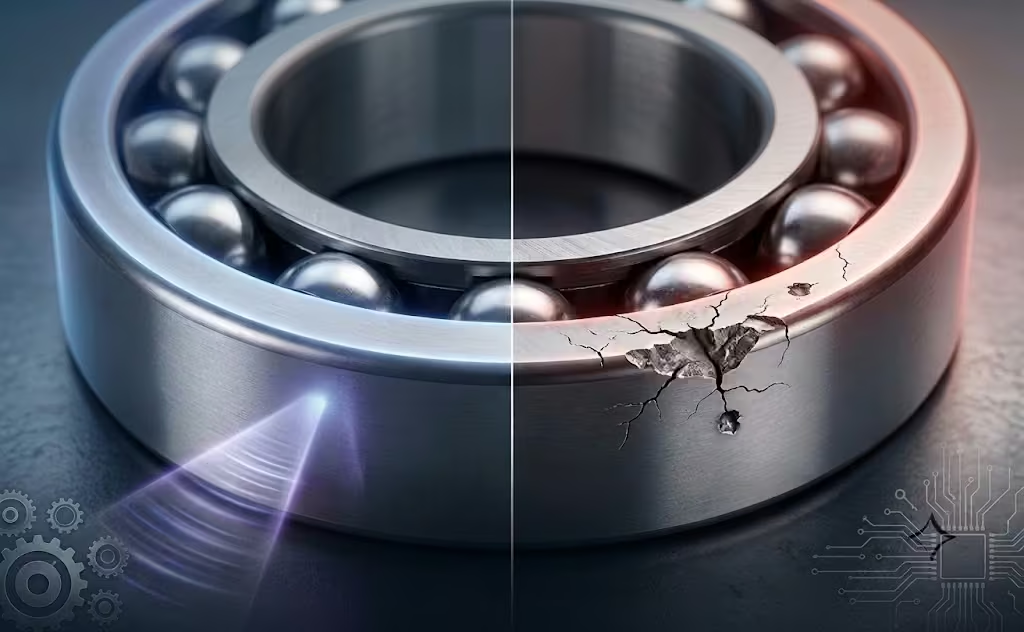
Of all the ways a bearing can fail, fatigue is the one that plays the longest game. There is no single moment of overload, no obvious spike in temperature, no dramatic noise that gives it away early. Fatigue accumulates quietly, cycle after cycle, deep within the material itself, and by the time it becomes visible as spalling or flaking, the damage has already been building for a very long time.
For maintenance and reliability teams, understanding fatigue is not an academic exercise. It is the difference between a planned bearing replacement and an unplanned line stoppage. According to the ISO classification of bearing failure modes, fatigue splits into two distinct mechanisms, subsurface initiated and surface initiated, and each tells a different story about what is really happening inside your machinery.
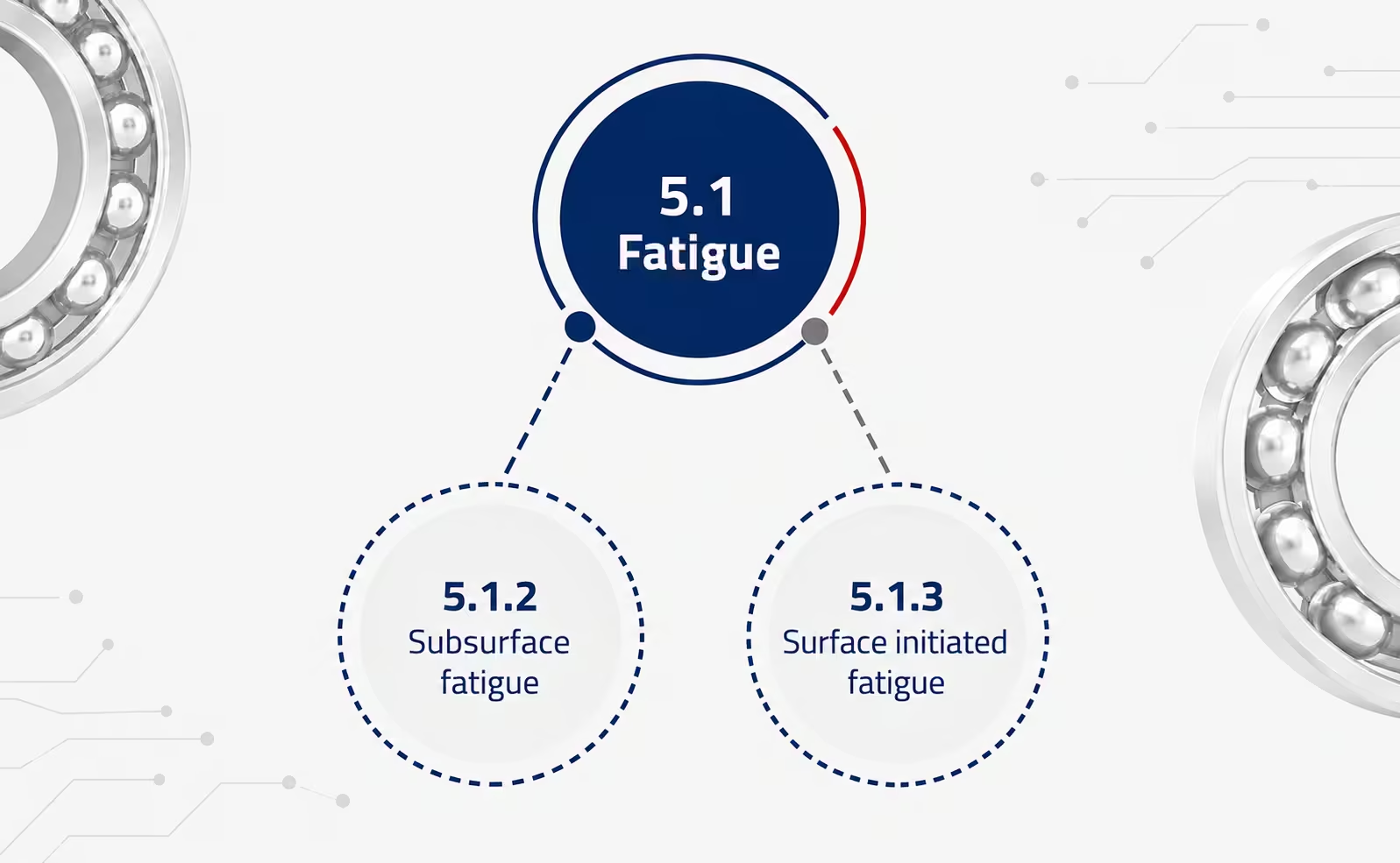
Subsurface Initiated Fatigue (5.1.2): Damage That Starts Where You Can’t See It
Subsurface fatigue begins beneath the raceway surface, invisible to routine inspection until it has already progressed. It is the classic, textbook fatigue mechanism, and understanding its progression is the first step to preventing it.
HOW IT DEVELOPS
Repeated stress cycles gradually load and unload the material beneath the contact surface.
Over time, these cycles cause structural changes within the material itself.
Microscopic cracks begin to form below the surface, out of sight and undetectable by visual inspection.
These micro cracks propagate upward through repeated loading.
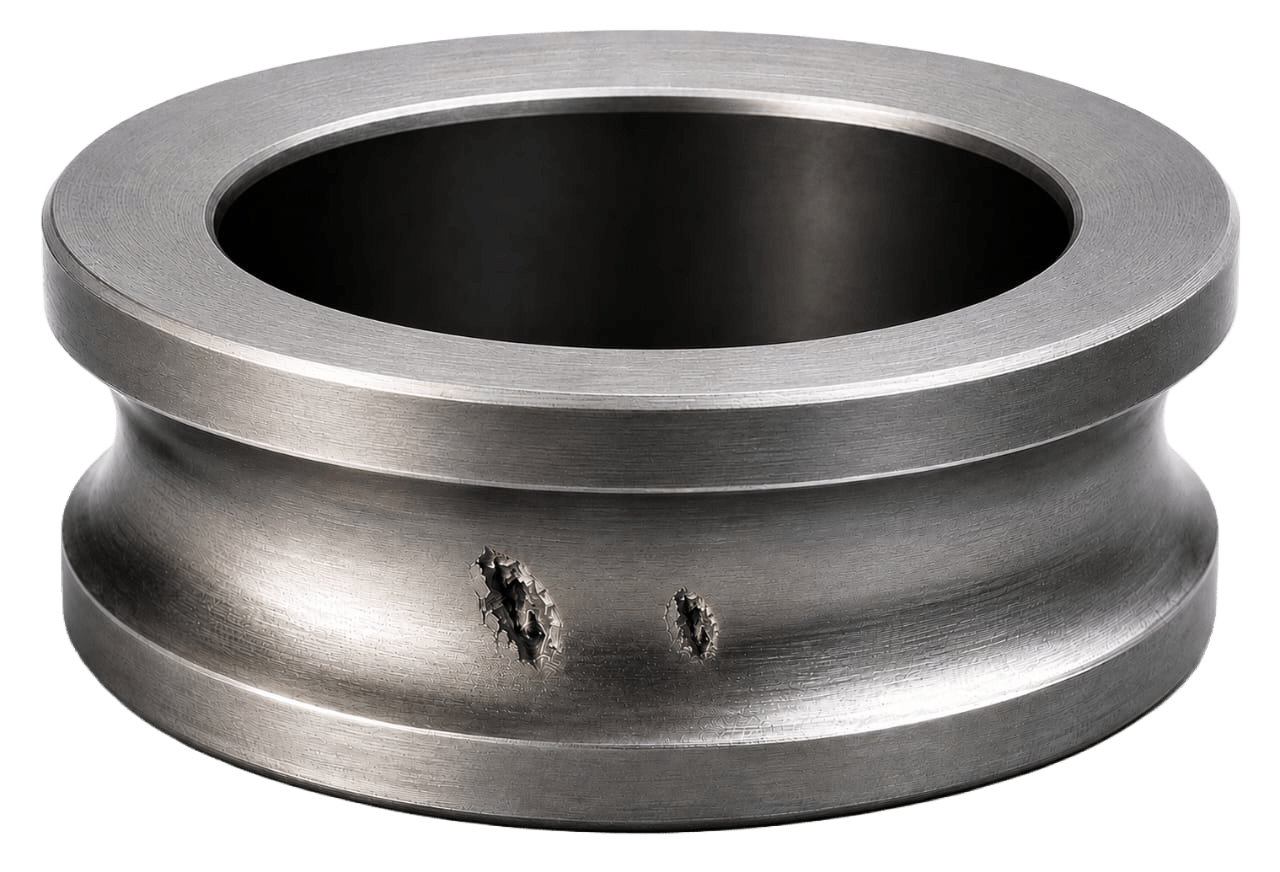
Eventually they reach the surface, causing spalling, also known as flaking or peeling, where fragments of material break away from the raceway.
HOW TO PREVENT IT
Select the correct bearing for the application. Load, speed, and environment all matter.
Specify only high quality bearings from trusted manufacturers.
Ensure the components surrounding the bearing, including housings, shafts, and seals, are in good condition.
Mount the bearing correctly, every time, using the right tools and technique.
Subsurface fatigue is a materials problem hidden from view. The best defence is getting the fundamentals right before the bearing ever goes into service.
Surface Initiated Fatigue (5.1.3): When Lubrication Breaks Down
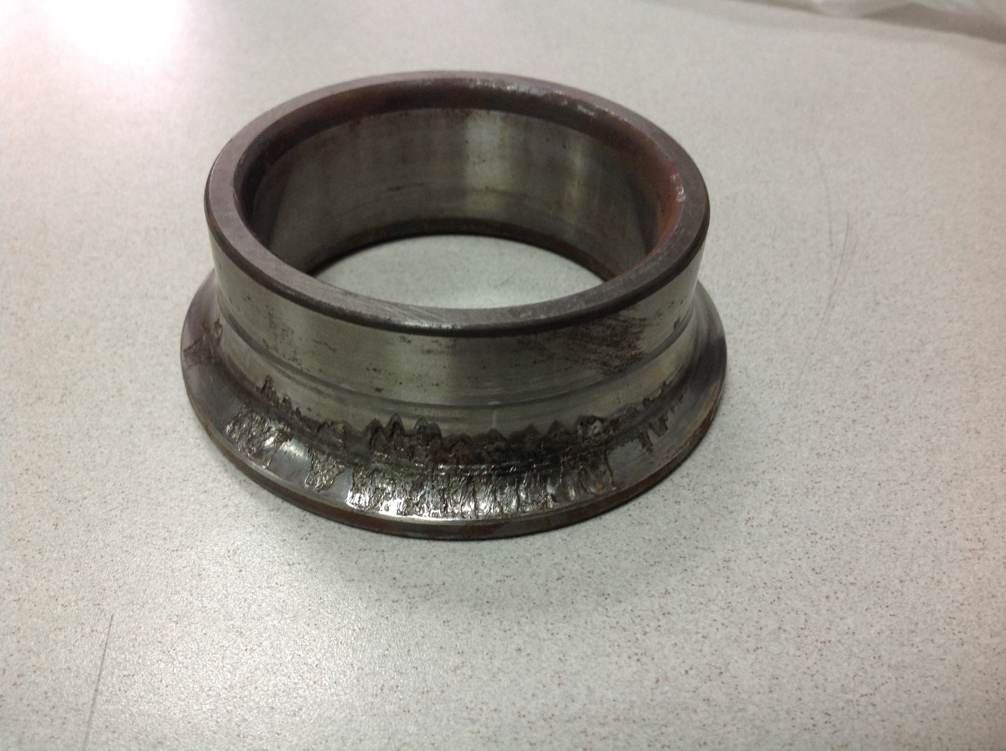
Where subsurface fatigue originates deep within the material, surface initiated fatigue starts at the point of contact, and it is almost always connected to the lubrication regime. This is the failure mode most directly within a maintenance team’s control.
HOW IT DEVELOPS
The lubrication regime becomes reduced or inadequate, allowing metal to metal contact.
Surface distress appears as the protective lubricant film thins or breaks down.
Sliding motion between contact surfaces accelerates wear at the asperities, the microscopic peaks on any bearing surface.
Burnishing and glazing occur as these asperities are repeatedly deformed and smoothed.
Micro cracks form at the asperities themselves.
These develop into micro spalls, small, localised surface fatigue damage that spreads if left unaddressed.
HOW TO PREVENT IT
Make sure you have the right bearing for the application.
Operate with adequate lubrication at all times.
Use the right lubricant for the operating conditions.
Apply the right quantity. Too little or too much both cause problems.
Lubricate at the right time, following a proactive rather than reactive schedule.
Check lubricant quality at regular intervals to catch degradation before it causes damage.
Watch for overloading, which accelerates every stage of surface fatigue.
Why This Distinction Matters on the Plant Floor
Root Cause Analysis
Treating all fatigue failures the same way is one of the most common, and costly, mistakes in reliability programmes. A bearing that failed through subsurface fatigue points to a selection, quality, or mounting issue upstream. A bearing that failed through surface fatigue points squarely at the lubrication regime. Root causing the right mechanism means fixing the actual problem instead of simply replacing the part and waiting for it to happen again.
Technical Partnership
This is where the value of a knowledgeable technical partner becomes clear. Choosing the right bearing, sourcing genuine quality, and maintaining the correct lubrication practice are not one time decisions. They are ongoing disciplines that depend on having the right products, the right guidance, and the right supply chain behind you.
Catching Fatigue Before It Spalls: KG Smart Support
The KG Ultra App’s KG Smart Support helps maintenance teams detect bearing fatigue before it develops into costly spalling failure. By combining online and portable condition monitoring, remote failure analysis, maintenance assessment, and direct engineering consultation, the app enables early identification of lubrication, mounting, contamination, and application issues before failure occurs. KG Smart Support empowers maintenance teams to make informed decisions, improve reliability, extend bearing life, and reduce unplanned downtime.
A Partner Built Around Reliability: KG International
With 58+ years of experience, a presence in more than 60+ countries, and over 24+ million items in stock, KG International supports maintenance and reliability teams with the industrial and automotive MRO products, including bearings, lubricants, greases, and seals, needed to keep fatigue failures from becoming production losses.
Industry Experience
Global Presence
In Stock Availability
Fatigue may be a silent failure mode, but it is not an unpredictable one. With the right bearing, the right lubrication discipline, and the right partner, backed by tools like KG Smart Support, it is entirely manageable.
KG International. Manufacturer and distributor of industrial and automotive MRO products.
